Mobile Technology Reshapes Live Tournament Mechanics for New Slot Games
Written by Lars Hansen · Aug 21, 2026
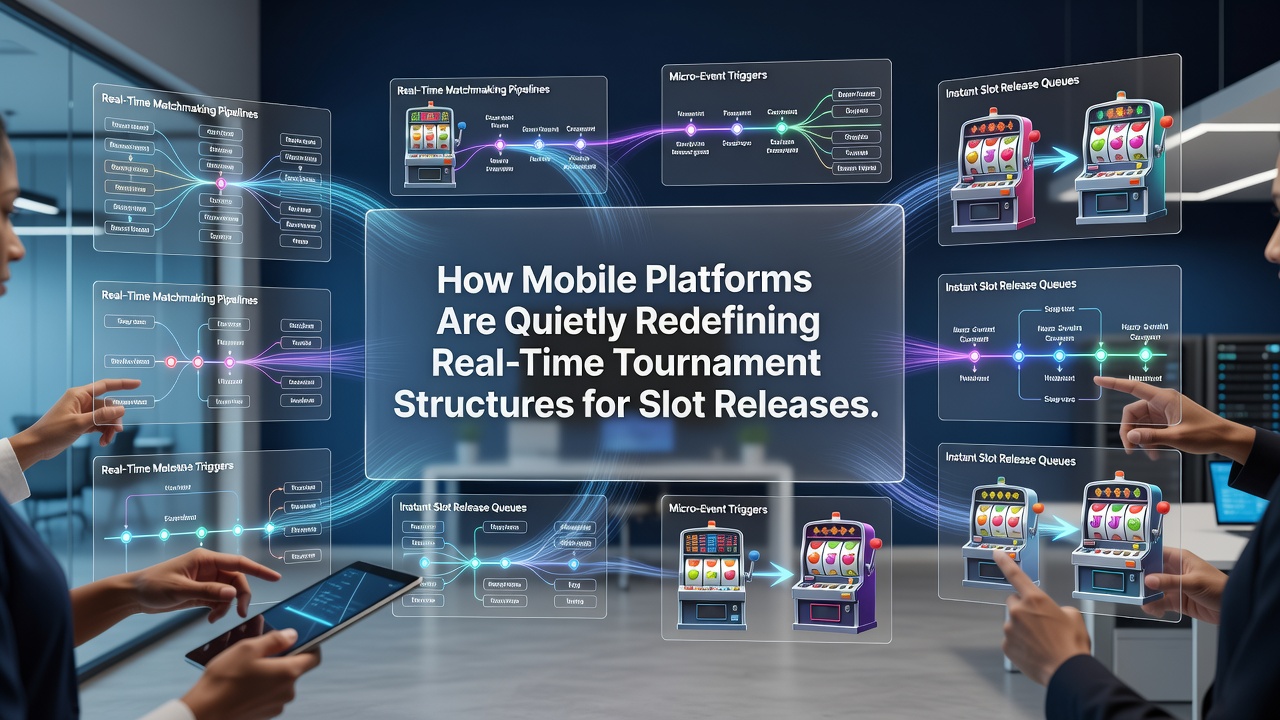
Mobile Technology Reshapes Live Tournament Mechanics for New Slot Games
Operators now integrate mobile platforms directly into slot tournament formats, which allows instant updates to leaderboards and player standings during live events. Data from industry reports indicate that participation rates in mobile-enabled tournaments rose sharply through 2025 and into 2026, with many providers releasing new slot titles tied to these competitions. The American Gaming Association notes that cross-device access expands reach while maintaining synchronized play across thousands of participants.
Real-Time Updates Through Mobile Infrastructure
Push notifications and live data streams deliver results within seconds of each spin, whereas earlier systems required manual refreshes or delayed postings. This shift stems from backend architectures that connect mobile apps to central servers handling simultaneous entries. Observers note that such connections support tournaments featuring progressive prize pools that adjust dynamically based on collective player activity. Research from the University of Nevada's gaming studies group shows that real-time feedback loops increase session durations by measurable margins when compared with static formats.
Providers schedule slot releases to coincide with tournament windows, which creates coordinated launch campaigns across multiple regions. In August 2026 several major studios aligned new game deployments with mobile-first events that ran for 48-hour cycles. These alignments allow operators to track metrics such as spin frequency and bet distribution in granular detail, feeding the information back into leaderboard algorithms that rank players accordingly.
Geographic Expansion and Regulatory Variations
Canadian provincial regulators have examined mobile tournament models for compliance with player protection standards, while Australian authorities review similar structures through state-based oversight bodies. The structures differ by jurisdiction yet share common technical requirements around data encryption and audit trails. Figures from the Canadian Gaming Association reveal that mobile tournament entries accounted for over 60 percent of total participation in select markets during the first half of 2026.

European operators outside the United Kingdom have adopted comparable systems, drawing on frameworks established by national gaming commissions in Malta and Sweden. These implementations emphasize seamless integration between land-based terminals and mobile interfaces, which permits hybrid events where participants switch devices mid-tournament without losing progress. Studies published in the Journal of Gambling Studies document that such flexibility correlates with broader demographic reach, including higher engagement among younger cohorts who prefer app-based interactions.
Technical Features Driving Structural Changes
API connections between game engines and tournament management software enable features such as auto-adjusting difficulty levels and personalized challenges delivered directly to player devices. Developers embed these elements into new slot releases so that each title launches with built-in tournament modes that activate automatically upon mobile download. The approach reduces setup times for operators and standardizes rules across different game themes.
Cloud-based processing handles the volume of concurrent users, which prevents lag during peak periods when thousands of spins occur per minute. Providers report that server capacity expansions in 2025 supported sustained growth in tournament scale, with some events now accommodating over 50,000 simultaneous entrants. This capacity stems from partnerships with telecommunications firms that prioritize low-latency routing for gaming traffic.
Player Engagement Patterns and Data Insights
Analytics platforms capture behavioral data at the individual level, revealing patterns in betting strategies and session timing that inform future tournament designs. Operators use these insights to calibrate entry fees, prize distributions, and qualification thresholds for subsequent events. Reports from the National Council on Problem Gambling highlight the importance of transparent data usage policies in maintaining trust during these expanded mobile formats.
Seasonal campaigns in August 2026 incorporated mobile-exclusive qualifiers that fed into larger global finals, creating pathways for regional winners to compete on international stages. The layered structure relies on mobile push alerts to notify participants of advancement, which maintains momentum across multiple rounds spanning several days.
Conclusion
Mobile platforms continue to influence how slot tournaments operate through integrated real-time systems and synchronized releases. Industry data and regulatory reviews across multiple regions document steady adoption of these formats, with technical capabilities supporting larger scales and faster updates. Providers align new game launches with mobile tournament cycles to leverage existing infrastructure while meeting varied compliance requirements. The resulting structures reflect ongoing technical evolution rather than isolated innovations.