Distributed Ledger Technology Strengthens Verification in Progressive Jackpot Prize Networks
Written by Zara Weber · Sep 23, 2026
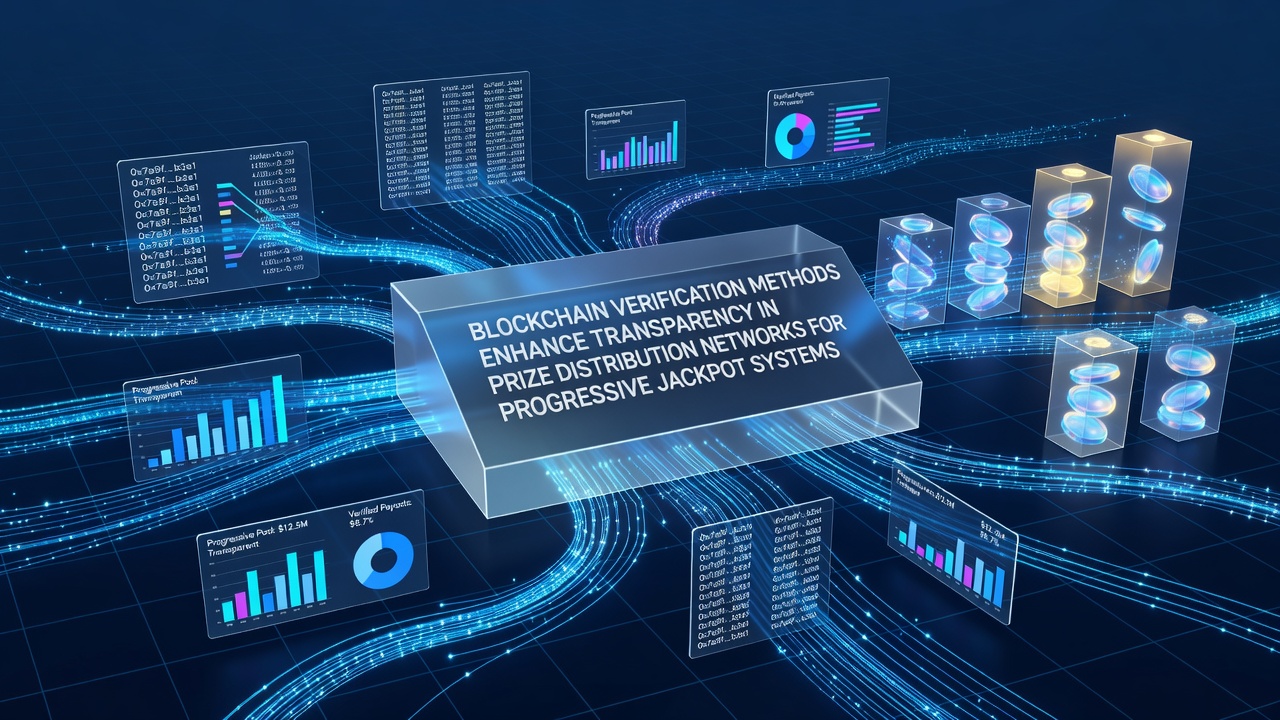
Distributed Ledger Technology Strengthens Verification in Progressive Jackpot Prize Networks
Progressive jackpot systems connect slot machines and online platforms across wide geographic areas, pooling contributions into shared prize pools that grow until a qualifying win triggers payout, and blockchain verification methods now provide immutable records of each contribution, win condition, and fund transfer. Operators record every transaction on distributed ledgers where cryptographic hashes link successive blocks, creating an auditable trail that regulators and participants can inspect without relying on centralized databases that remain vulnerable to single-point alterations.
Core Verification Mechanisms at Work
Smart contracts execute automatically once predefined conditions such as minimum bet thresholds or random number generator outputs meet established criteria, releasing funds only after consensus across network nodes confirms the event, and these contracts eliminate manual intervention that previously introduced delays or disputes. Hash functions generate unique identifiers for each jackpot increment, while zero-knowledge proofs allow verification that contributions reached the pool without exposing sensitive player data, and multiple nodes must validate each block before it joins the chain.
Research from academic institutions shows these layered checks reduce discrepancies in reported versus actual pool sizes, with one study from a European technical university documenting a 99.8 percent match rate between ledger entries and independent audits over twelve months of operation. Gaming associations in North America report similar patterns where operators adopting permissioned blockchains experienced fewer reconciliation issues during monthly reporting cycles.
Implementation Across Land-Based and Online Platforms
Land-based casinos integrate hardware wallets that broadcast machine-level contributions directly to the ledger in real time, whereas online operators embed API calls that timestamp each spin's contribution and route it through the same verification layer. Both environments rely on timestamp servers synchronized to atomic clocks, ensuring chronological accuracy when multiple sites contribute simultaneously to the same progressive pool. In September 2026 several multi-state networks in the United States plan to expand these synchronized ledgers to cover additional tribal gaming facilities, increasing the number of connected machines by an estimated 18,000 units.

One operator in Australia documented how the introduction of on-chain verification shortened dispute resolution from an average of nine days to under four hours, because all parties could reference the same immutable transaction history rather than exchanging separate spreadsheets. Canadian provincial regulators have begun requiring similar ledger exports as part of annual compliance filings, creating standardized data formats that simplify cross-jurisdictional comparisons.
Regulatory and Industry Adoption Patterns
Government agencies outside the United Kingdom have started referencing blockchain audit trails in licensing renewals, with the Nevada Gaming Control Board publishing draft guidelines in early 2026 that outline acceptable consensus mechanisms and data retention periods. Industry reports from the Asia-Pacific region indicate that operators using these systems saw a measurable drop in player complaints related to prize calculations, although overall adoption rates remain higher among larger corporations than among smaller regional venues.
What's notable is how permissioned networks balance transparency with operational privacy, allowing only authorized auditors to access full transaction details while still publishing aggregate pool statistics for public review. Trade groups such as the European Gaming and Betting Association have compiled case studies showing reduced audit costs for members who migrated prize ledgers to blockchain infrastructure.
Technical Challenges and Ongoing Developments
Scalability remains a focus area, because high-frequency contributions from thousands of machines can strain throughput on certain ledger architectures, prompting developers to explore layer-two solutions that batch multiple transactions before final on-chain settlement. Energy consumption associated with proof-of-work variants has led most gaming implementations to favor proof-of-stake or practical Byzantine fault tolerance protocols instead, and these alternatives maintain security while aligning with broader sustainability reporting requirements.
Interoperability standards continue to evolve, with working groups under the Gaming Standards Association examining common data schemas that would let different operators share progressive pools without custom integration projects. Early tests conducted in 2025 demonstrated successful cross-ledger prize transfers between two separate networks without loss of verification integrity.
Conclusion
Blockchain verification methods supply a verifiable, tamper-resistant framework for tracking contributions and disbursements in progressive jackpot networks, delivering consistent records that support regulatory oversight and operational efficiency. As more jurisdictions incorporate ledger-based reporting into compliance frameworks and operators refine scalability solutions, the technology continues to expand its footprint across both land-based and digital gaming environments.